Category: DISCOVER

  • Afternoon Tea & Chocolate at the Matiz Bar

    Afternoon Tea & Chocolate at the Matiz Bar

      Afternoon Tea & Chocolate at the Matiz Bar


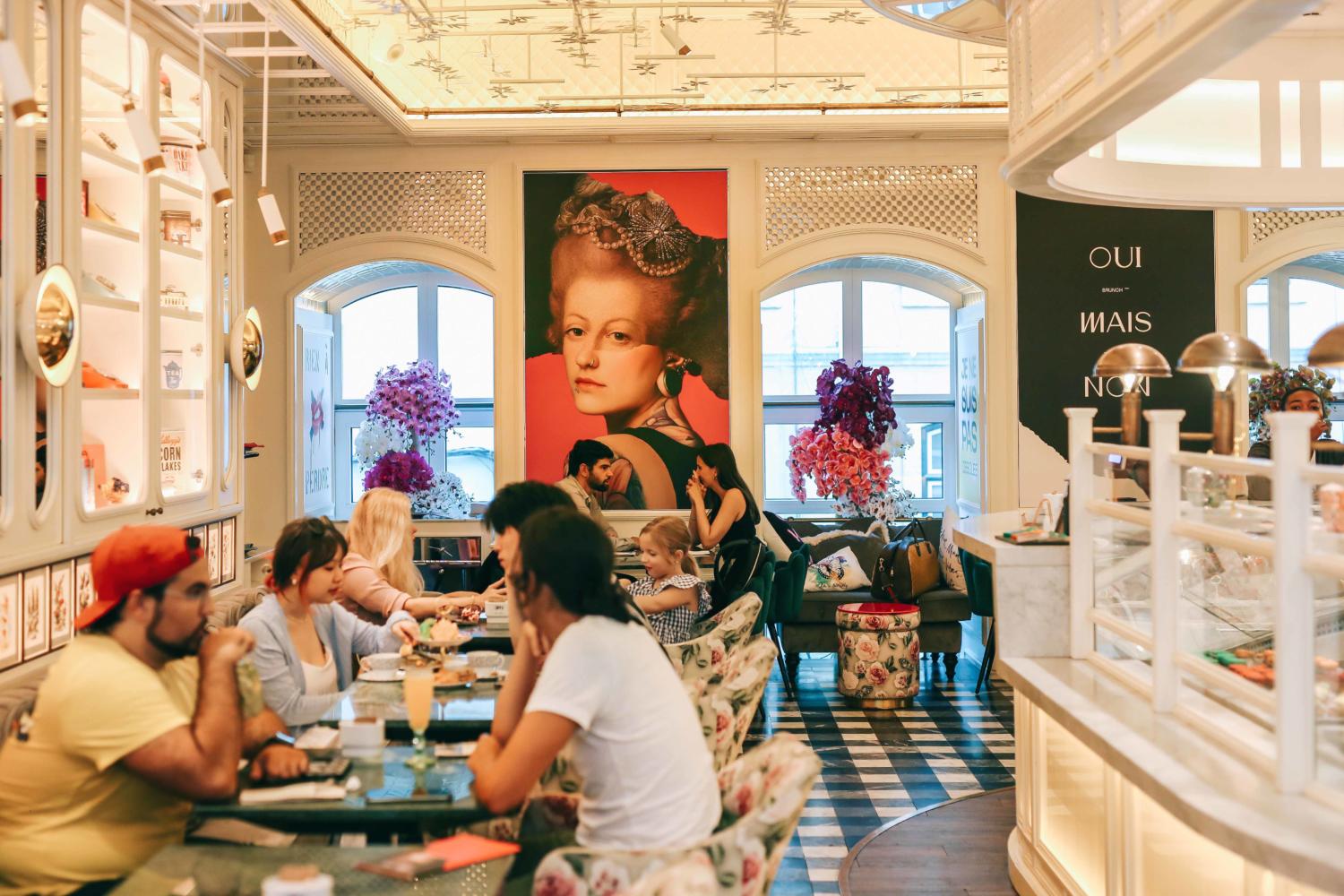
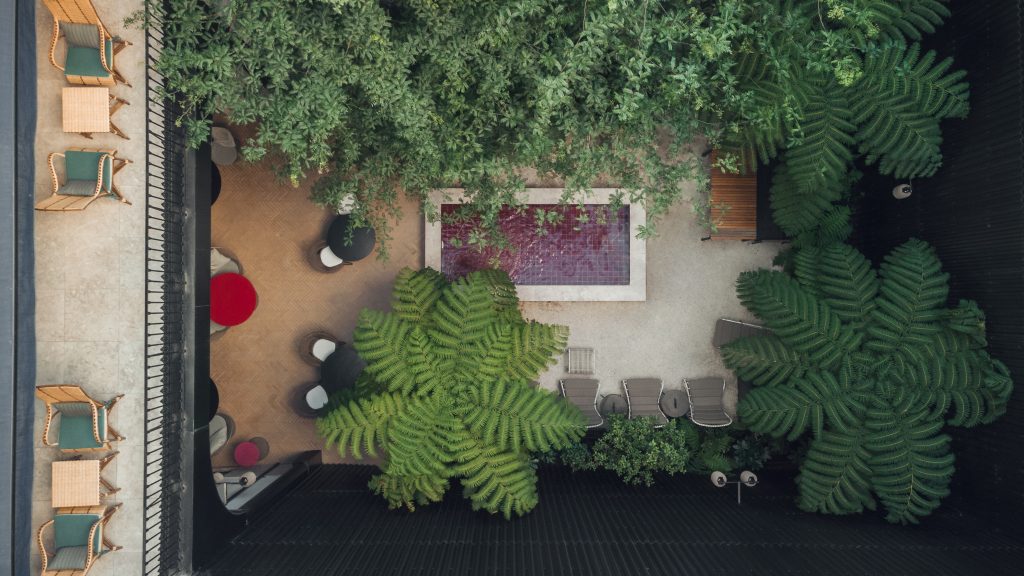
    Escape from the hectic streets of the capital for a moment of pure relaxation in the elegant and warm atmosphere of the Sofitel Lisbon Liberdade. Every day, from 3pm to 6pm, enjoy the classic Afternoon Tea & Chocolate at the Matiz Bar. Savor a delicious coffee, tea or hot chocolate from the hotel’s carefully curated selection, accompanied by your choice of exclusive pastries, an irresistible truffle or a classic pastel de nata.

    In the heart of Avenida da Liberdade, the Sofitel Lisbon Liberdade offers you an experience that promises to appeal to all the senses and renew your energy.

  • Rosa & Teixeira: A Journey of Excellence on Avenida da Liberdade

    Rosa & Teixeira: A Journey of Excellence on Avenida da Liberdade

    Rosa & Teixeira: A Journey of Excellence on Avenida da Liberdade

    Since its beginnings as a family tailor shop, Rosa & Teixeira has built a legacy of distinction and elegance on the iconic Avenida da Liberdade in Lisbon. Founded in 1944 by Francisco A. Rosa and later enhanced by António Teixeira, the brand has become synonymous with quality and sophistication in the world of high-end men’s fashion.

    With a tradition deeply rooted in artisanal excellence, Rosa & Teixeira honors its ancestors by preserving the most refined tailoring techniques. Their master tailors and seamstresses are true artisans, whose meticulous work and passion for the craft ensure that every piece they develop is a unique work of art.

    However, what truly sets Rosa & Teixeira apart from other brands is its ability to continuously reinvent itself without ever losing sight of its roots, which guarantee quality and excellent service regardless of the passage of time. Over the years, the brand has been a pioneer in blending the classic with the contemporary, creating collections that combine timelessness with the latest trends. This innovative approach allows the brand to stay relevant and modern while preserving its heritage and tradition.

    Today, Rosa & Teixeira continues to be a reference in the world of high-end men’s fashion, attracting a discerning and sophisticated clientele. With an eye towards the future, the brand remains true to its founding values while continuing to innovate and inspire a new generation of men’s fashion enthusiasts.

  • Tony Miranda the art of Perfection

    Tony Miranda the art of Perfection

    Tony Miranda the Art of Perfection


    Tony Miranda is a pioneer of Haute Couture in Portugal!

    Launching his career at the age of 18 at Maison Joseph Camps, under the tutelage of one of French haute couture’s greatest masters, he then moved on to Maison Ted Lapidus, where he served as creative director. In 1979, he established his own atelier, first at 61 bis, Avenue Suffren, and later at 5, Rue Cambon, one of the most prestigious fashion streets in Paris.

    In Portugal, he opened an atelier and boutique in Guimarães, followed by another in Porto years later. In Lisbon, in 1997, he reconstructed a Pombaline building, naming it after himself, and inaugurated it in 2000 on the emblematic Avenida da Liberdade, no. 92/100.

    He plays a pivotal role in promoting the image of Portugal and Portuguese know-how in an area that holds significant weight in the Portuguese economy, namely the fashion and clothing industry.

    With production and offices located in Guimarães, and with a private service space at Avenida da Liberdade, nº 92/100 in Lisbon, where the 2nd Floor Universe for Women and the 3rd Floor Universe for Men, composed with around 20 internal employees. Tony Miranda Haute Couture exports more than 95% of its creations, contributing high added value to the economy and affirming Portugal’s image in international markets.

    Research, study, experiment, in a permanent quest for “L’art de la Perfection” Tony Miranda is not only a designer but also a born entrepreneur. He establishes partnerships with universities and researchers, seeking to innovate in raw materials, and is a pioneer in the introduction of scented articles in home textiles and also in his women’s and men’s collections. The TM Cork collection, presented in the USA, is an example of innovation, mixing different raw materials where creativity and technique prevail. The various women’s and men’s collections presented throughout his career, nationally and internationally, have made this brand “L’art de la Perfection”.

    “Nome da Rosa”

     Private collection, inspired by, “Nome da Rosa”, where innovative design and the incorporation of embroidered details, tattooed on the body of silks, transport the masculine universe to an image of spontaneous elegance. The subtlety of muslins and chiffons reinforces the timelessness of everyday life, giving special focus to contemporary tattoos and graffiti, referring us to a direct articulation between the urban and Haute Couture.

     Brand DNA

    The Brand’s DNA is guided by rigor and professionalism, where comfort and elegance predominate in an evolution of the timelessness of fashion. The creator’s entrepreneurship and adventure give the Tony Miranda brand a constant search for other areas closely linked to fashion. In his latest project, he conveys details of his career, with various objects, opening a four-star hotel, the TM Luxury Apartments Lisbon, where he also presents his collections and other social events.

    Tony Miranda inaugurate a building named after him on Avenida da Liberdade in 2000

    In 2000, he inaugurated the Tony Miranda building at the emblematic Avenida da Liberdade 92/100, for private service, in the women’s and men’s universe. All pieces are designed on the spot exclusively for the client’s body, advising a careful selection of materials, which will complete the model.

     Designer Tony Miranda at “Private Clients” on Avenida da Liberdade

    …. Today as yesterday,

    tomorrow as always!


    Styling Team:
    Fashion Production: Ana Fidalgo
    Digital Marketing: Pedro Alexandre and @guime.san
    Photography: @andrecostaph
    Edition: @andre.vazao


  • Sociedade Nacional de Belas Artes an institution at the service of the arts

    Sociedade Nacional de Belas Artes an institution at the service of the arts

     Sociedade Nacional de Belas Artes an institution at the service of the arts


    The Sociedade Nacional de Belas-Artes is the oldest and most representative artistic association in Portugal. Founded in 1901, it had previous origins, in the merger of Grémio Artístico, de Silva Porto and his Grupo do Leão (from 1891), with the Sociedade Promotora de Belas Artes, originating, in turn, in the Academy, in 1861, and first presided over by Marquis Sousa Holstein. Its headquarters, designed by architect Álvaro Machado, opened in 1913, offers a large French-style “Salon”, measuring 50m by 15m, unique in the Iberian peninsula, and the fulfillment of the dream of the first booksellers who returned from Paris and Barbizon, at the end of the 19th century.

    Successive generations asserted themselves here, from the representatives of romanticism – Tomás da Anunciação, Visconde de Menezes, Assis Rodrigues, Victor Bastos, João Cristino, Miguel Lupi, Alfredo Keil, and then landscapers, led by the example of Silva Porto: Columbano, José Malhoa, João Vaz, Rafael Bordalo Pinheiro, António Ramalho.

    The immediate generation, of Veloso Salgado, Ressano Garcia, Alves Cardoso, Benvindo Ceia, Costa Mota (uncle), Rosendo Carvalheira, will be joined by Carlos Reis, Roque Gameiro, Jorge Colaço, Teixeira Lopes, João da Silva, and others. In 1920, the SNBA also had many non-artist members: traders, musicians, poets, and art enthusiasts. The atmosphere is eclectic, where day and night classes run alongside the pool tables and alternate with dances and festive events. Here masters such as Malhoa, Veloso Salgado, Columbano, Carlos Reis, Condeixa, Roque Gameiro, and Mário Augusto, offer their classes to members, in a tradition maintained without interruption to this day, in the SNBA Artistic Training Courses.

    In 1920 the “question of the new people” arose, a new generation whose entry as members was barred. There are more than 100 including the “Five Independents,” who will finally be able to exhibit in 1923 (Dordio Gomes, Henrique Franco, Francisco Franco, Diogo de Macedo, Alfredo Migueis) and who will leave the invitation to Eduardo Viana, Almada Negreiros, Milly Possoz, to try to alleviate the blockade of Adães Bermudes and his management. Mário Eloy, Lino António and even publicists such as António Ferro, among many others who were rejected, can also join this current of new people. As a commitment and innovation, in 1925, Eduardo Viana organized the 1st Salão D’Outono, as opposed to the traditional annual Spring Salon, which remains the most academic. This is what Francis Smith, Emérico Nunes, António Soares, Jorge Barradas, Clementina Carneiro de Moura, Manoel Jardim, Sára Affonso and many others exhibit, including architects with their projects (such as Carlos Ramos, Cristino da Silva, José Pacheco, Jorge Segurado).

    In 1930 and 1931, the two Independent Salons took place, by António Pedro, with Arlindo Vicente, Mário Eloy, Mário Novais, Carlos Botelho and joined by Leopoldo de Almeida, Canto da Maia, Barata Feyo, António Duarte, Roque Gameiro, João Carlos, Hein Semke, Clementina Carneiro de Moura, Júlio Reis Pereira, the architects. Jorge Segurado, Carlos Ramos – and Maria Helena Vieira da Silva. The “Free and Preparatory Course” classes are held during this period, aiming to expand access to Fine Arts Schools.

    In the Estado Novo, in parallel, the first two exhibitions of the National Information Secretariat, directed by António Ferro, in 1935 and 1936 were also held at the SNBA.

    The then minister of propaganda here announces, at a dinner for artists, the new “Politics of the Spirit.”

    But soon the alternative manifested itself and, in 1940, Abel Salazar’s great exhibition was received and, in 1945, the foundations for a platform of civic and artistic intervention were established here: CEJAD / MUD, which provided the renewing structure of the famous General Exhibitions of Plastic Arts, self-organized annually between 1946 and 1956, in a total of 10, every year – except 1952, the year in which the SNBA was closed by the Estado Novo – opening many of them symbolically on May 1st. Messages combating illiteracy, calling for registration and voting are displayed on graphic arts posters, and the aesthetic and programmatic denunciation contained in neo-realism – systematized by Júlio Pomar, is launched in painting and drawing. Mário Dionísio, Manuel Filipe, Ribeiro de Pavia, Arco, Álvaro Perdigão, Maria Keil, Keil do Amaral, Vespeira, António Domingues, José Dias Coelho, Huertas Lobo, Júlio, Dourdil, Rudy, Manuel Filipe, Manuel Mendes, Ribeiro de Pavia, Betâmio, Vasco da Conceição, Maria Barreira, Louro de Almeida, Clementina Carneiro de Moura, joined by Arlindo Vicente, Sena da Silva, Euclides Vaz, Augusto Gomes, Cândido Costa Pinto, Carlos Botelho, Celestino de Castro, Avelino Cunhal, Domingos Saraiva, and also the former republicans who have always been linked to the SNBA: João da Silva, Falcão Trigoso, António Saúde, António Conceição Silva, Anjos Teixeira, and to which they will be added over the years, many other artists and architects, such as Francisco Castro Rodrigues, Francisco Keil, both of great importance in this movement. Also participating in EGAP are architects Alberto Pessoa, Ernâni Soares Nunes, Daciano, Francisco da Conceição Silva, Frederico George, Manuel Tainha, Formosinho Sanchez, and younger artists, such as Nikias Skapinakis, Charrua, Hogan, Rogério Ribeiro, João Abel Manta, Victor Manaças, Vítor Palla, Sá Nogueira, Lima de Freitas, José Viana, Frederico George, Carlos Calvet, Tossan, Sebastião Rodrigues, António Alfredo, António Quadros, Artur Bual, Fernando Lanhas, Bartolomeu Cid, Eduardo Luís, Relógio, Lagoa Henriques, Leopoldo de Almeida, Lourdes Castro, Mário Henrique Leiria, Demée, Nuno San Payo, Paulo D’Eça Leal, Querubim Lapa, among a whole generation of sculptors, painters, architects, photographers and graphic designers.

    In January 1947, the National Council of Portuguese Women, led by Maria Lamas, organized at SNBA an “Exhibition Hall of Books Written by Women,” with 3,000 books from all over the world, films and conferences – the exhibition that in a certain way preluded the extinction of this movement by the Estado Novo, and founded more than thirty years earlier by Adelaide Cabete (in 1914).

    Still in 1947, at the II General Exhibition of Plastic Arts, the Ministry of the Interior selected and seized 11 neo-realist paintings by 10 artists, considered politically unacceptable by the regime.

    At EGAP, preparations were made for what would be the first National Architecture Congress, in 1948, with Cotinelli Telmo, Pardal Monteiro, Miguel Jacobetty and the contribution of the new ones, and the signing of Le Corbusier’s Charter of Athens.

    Also in the SNBA, surrealist groups originated and split, the first, from 1948, with António Pedro, António Dacosta, Alexandre O’Neil, Fernando de Azevedo, Vespeira, Moniz Pereira and José-Augusto França, and the second, from Cesariny, Cruzeiro Seixas, Mário Henrique Leiria, António Maria Lisboa, Carlos Calvet.

    In April 1952, the SNBA was closed sine die by the Estado Novo, the result of Eduardo Malta’s confrontation with the young sculptor José Dias Coelho, – the latter would later be murdered in the street, by PIDE, in 1961. He managed to rescue and reopen the SNBA after the intervention of the painter António Conceição Silva, now 83 years old, and some founding members who are still alive and involved.

    In 1956 José-Augusto França organized the 1st Salão dos Artistas Hoje, beginning a unique journey as a critic and historian. In 1959, the exhibition ’50 Independent Artists’ by Conceição Silva, Fernando Azevedo, João Abel Manta, Jorge Vieira, Júlio Pomar, and Vespeira was held, in the context of Humberto Delgado’s candidacy for the presidency of the Republic, and brought together the next generation: Alice Jorge, António Charrua, António Areal, Bartolomeu Cid dos Santos, Carlos Calvet, Fernando Azevedo, Francisco Relógio, João Abel Manta, João Cutileiro, João Hogan, Joaquim Rodrigo, Jorge Vieira, José Escada, José Júlio, Júlio Pomar, Lima de Freitas, Manuel Baptista, Menez, Nikias Skapinakis, Querubim Lapa, Sá Nogueira, Rui Filipe, Vespeira.

    Also here, in 1957, the 1st exhibition of the new Gulbenkian Foundation took place, with great impact on the press and society in general (“345 contos de prizes”). The exhibition “British Art of the 20th Century” (1962) will also be notable when opening to the outside.

    The KWY group of Lourdes Castro, René Bertholo, Costa Pinheiro, Escada and João Vieira, with Christo and Jan Voss, he exhibited in 1960. In 1965, the Artistic Training Courses were renewing, starting the teaching of Design and Sociology of Art, for example, with the participation of notable personalities from our artistic environment such as Rolando Sá Nogueira, Manuel Tainha, Sena da Silva, Daciano Costa, José Cândido, Fernando Conduto, Rocha de Sousa, Quintino Sebastião, and the historians and essayists José-Augusto França, Ferreira de Almeida, José Blanc de Portugal, Ernesto de Sousa, Adriano de Gusmão, Santos Simões, Rui Mário Gonçalves, and other values of national art and culture.

    Here the Association of Portuguese Architects and the future Order of Architects, the Association of Designers, and the Portuguese Section of AICA originated, which can be referred to as also the Cineclubes (the Jardim Universitário de Belas Artes – JUBA – by Guilherme Filipe and José-Augusto França), the musical sessions of Fernando Lopes Graça, and the groups of theater that was recovered here. Also in 1965, under the Presidency of Arch. Conceição Silva, created in the small Gallery of Modern Art, in the cave, the experimental room where many international values will be revealed: Arshile Gorky, Paula Rego, Hogan, Nikias, Victor Belém, Helena Almeida, Charrua, Espiga Pinto, Maria Velez, Eduardo Nery, João Fragoso, MAN, Nuno de Siqueira, António Sena, Fernando Calhau, Carlos Ferreiro, Miguel Arruda, Guilherme Parente, Isabel Laginhas, Graça Antunes, Eduardo Gageiro, Noronha da Costa, Artur Rosa, Rocha de Sousa, Hilário, Pires Vieira, followed by Mário Botas, Maria Gabriel, Manuel Casimiro, Teresa Magalhães, Raul Perez, Ana Marchand, Carlos Carreiro, António Viana, Cutileiro, Graça Morais, Jorge Molder, Jaime Silva, Luís Camacho, Rocha Pinto, Quadros Ferreira, Pedro Chorão, João Duarte, and some other artists also hosted in the Gallery on the first floor.

    In 1970 Arlindo Vicente exhibited in retrospective, and in 1972 they exhibited Lima de Freitas and António Trindade, and then presented the exhibition AICA SNBA 1972, which proposes a renewed critical discourse, by Fernando Pernes, Rocha de Sousa and Rui Mário Gonçalves.

    In 1973, the exhibition 26 Artists of Today was held, a group of distinguished artists by the Soquil Awards. In December, at “Exhibition 73” the Lying Soldier, ‘Jaz Morto e Refecece’ by Clara Menéres. At the inauguration, João Vieira’s performance, involved a naked woman painted gold.

    Also notable in the 70s were the exhibitions by the Puzzle group (Armando Azevedo, Albuquerque Mendes, Carlos Carreiro, Dario Alves, Graça Morais, Jaime Silva, João Dixo, Pedro Rocha, Gerardo Burmester and Fernando Pinto-Coelho), the exhibition ‘Portuguese Artists’, organized by Clara Menéres, Emília Nadal, Sílvia Chicó, and with Paula Rego, Graça Morais, Ana Hatherly, Ana Vieira, Menez, Maria Velez, Alice Jorge. Still other exhibitions, ‘Local Mythologies,’ ‘Paper as Support,’ ‘Eroticism in Portuguese Art’, or the major solo exhibitions by Helena Almeida, in 1972 and 1976.

    At the beginning of the 80s, Luís Pavão, Jorge Molder, Manuel Magalhães. In 1983, the great multidisciplinary exhibition took place here and programmatic “After modernism” conceived by Luís Serpa, and co-organized by Manuel Graça Dias, Leonel Moura, António Cerveira Pinto, involving, in addition to the arts visual and architectural, design, fashion, and dance.

    The exhibition “Arquipélago,” in 1985, by Pedro Cabrita Reis, Pedro Calapez, Pedro Croft, Rui Sanches and, later, “Continentes: V homeosthetic exhibition,” in 1986, with Pedro Portugal, Pedro Proença, Fernando Brito, Ivo, Xana and Manuel João Vieira mark the period of affirmation of a generation. The collective “New Drawing Tendencies,” in 1986, curated by Michel Toussaint, also dates back to this period.

    Other proposals appeared, in the following years, in 1990: “Seven Deadly Sins,” with Miguel Branco, João Queiroz, Jorge Varanda, Jaime Lebre, Gonçalo Ruivo, Helena Pinto and José António Cardoso, and in 1994 the “Independent Worm Saloon,” curated by Alexandre Estrela and Rui Toscano. In the same multimedia production line, in 2003, the exhibition by Vasco Araújo, at the Salon, “Sabine/Brunilde”.

    In recent years, SNBA has been convening contemporary artists internationally through mobilizing partnerships: the Drawing Gallery Fair “Drawing Room,” alongside notable solo exhibitions such as Maria José Oliveira (2017) Pedro Saraiva (2018), João Jacinto (2019), Isabel Sabino (2019), in addition to a growing approach to new audiences, with the Antiquarian fair, or participation in the exhibitions of Monstra (animated film), from the Portuguese Cinema Academy, from New Art Fest, or the international “Navigator Art on Paper” award.

    The artistic foundations are also being revalued with major exhibitions such as “The 500 Drawings of Silva Porto” or “João da Silva: the Animalist Sculptor,” already in 2020, or, in the years previous ones, with retrospectives by Francisco de Aquino, Joaquim Palencia, Manuel Ribeiro de Pavia, Menez and Ruy Leitão, Miguel D’Alte, and Betâmio d’Almeida.

    SNBA saw its contribution to society recognized by being awarded Member-Honorary member of the Order of Infante D. Henrique (1983), and honorary member of the Order of Freedom (in 2004).


    João Paulo Queiroz, 2020


  • Discover the  LHR – Hair & Skin Clinic on Avenida da Liberdade

    Discover the LHR – Hair & Skin Clinic on Avenida da Liberdade

    Discover the LHR – Hair & Skin Clinic on Avenida da Liberdade


    Founded in 2016, the LHR – Hair & Skin Clinic quickly established itself as a benchmark in hair transplantation, earning remarkable prestige on the international market. In 2020, it set out on a path in the field of dermoaesthetics. With an innovative vision and an approach centred on excellence, the clinic stood out for the quality of its services and its commitment to natural results. Recently, with the success and experience it has accumulated, Clínica LHR has turned its focus to the Portuguese market, bringing home the expertise and care that has made it famous across borders, with the aim of offering the Portuguese the same standard of quality recognised worldwide.


  • History of the Brodheim Family on Avenida da Liberdade: A Path of Success and Resilience

    History of the Brodheim Family on Avenida da Liberdade: A Path of Success and Resilience

    History of the Brodheim Family on Avenida da Liberdade: A Path of Sucess and Resilience


    Since 1986, the Brodheim Family has been making their mark on the iconic Avenida da Liberdade in Lisbon. It all began with the opening of their first flagship store, Rodier, marking the start of a successful journey in the luxury retail market.

    Over the following decades, the group expanded their presence, respresenting  renowned brands such as Burberry in 1991, Timberland in 1997, TOD’s in 2006, and Guess in 2009. These strategic partnerships not only solidified the Brodheim Group’s position on Avenida da Liberdade but also contributed to its growth and recognition.

    Throughout the years, the Brodheim Group has been a pioneer in the luxury retail scene, offering quality products and exceptional services to their customers. Their presence on Avenida da Liberdade has strengthened the family’s reputation.

    The story of the Brodheim Family is one of dedication, passion, and entrepreneurial vision. Their arrival on Avenida da Liberdade not only transformed the landscape of luxury retail in Lisbon but also left a legacy that continues to inspire future generations.

    It is undoubtedly a narrative of resilience, adaptation, and commitment to excellence. Despite challenges, the group remains an influential force in Lisbon’s luxury retail scene, contributing to the city’s economic and cultural development.

    Join us as we celebrate this extraordinary journey of the Brodheim Family and their unmatched presence on Avenida da Liberdade.


  • Who was António de Medeiros e Almeida

    Who was António de Medeiros e Almeida

     Who was António de Medeiros e Almeida


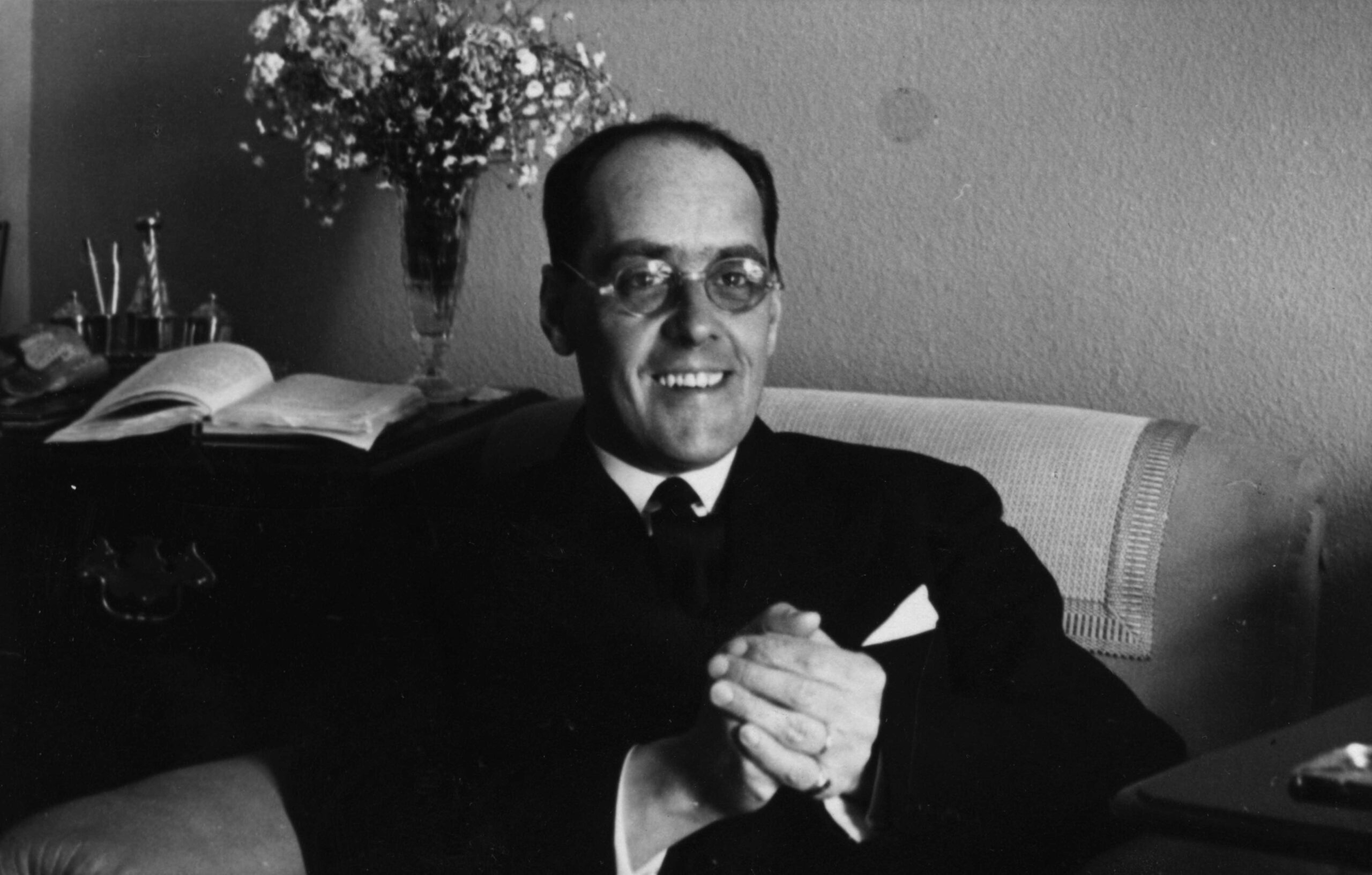
    António de Medeiros e Almeida

    Medeiros e Almeida was born on 17 September 1895 in Lisbon, where his father, João Silvestre d’Almeida, set up his medicine practice. The wealthy family environment, with a close circle of friends that included artists such as Veloso Salgado or the architect Miguel Ventura Terra, provided him with an upbringing that included a strong cultural and artistic aspect.

    When he finished school, António de Medeiros e Almeida began his studies in medicine, following in the footsteps of his father. However, intent on de­veloping his enterprising spirit and his appetite for business, he dropped out of university and travelled to Berlin, where he came into contact with the international business world.

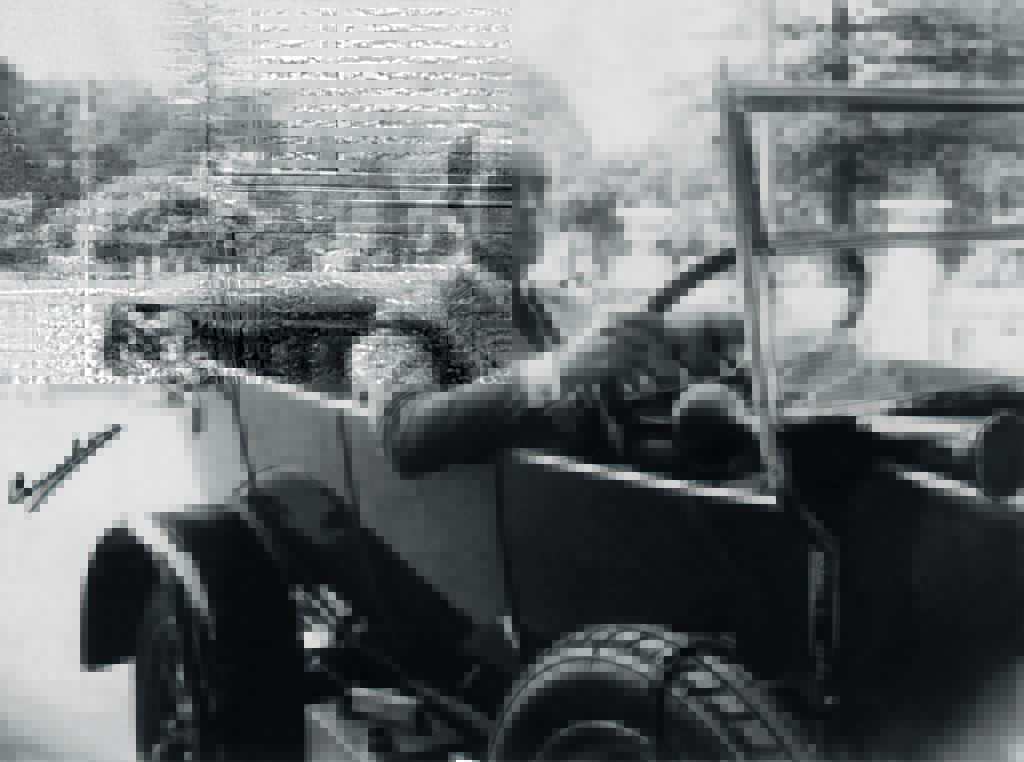
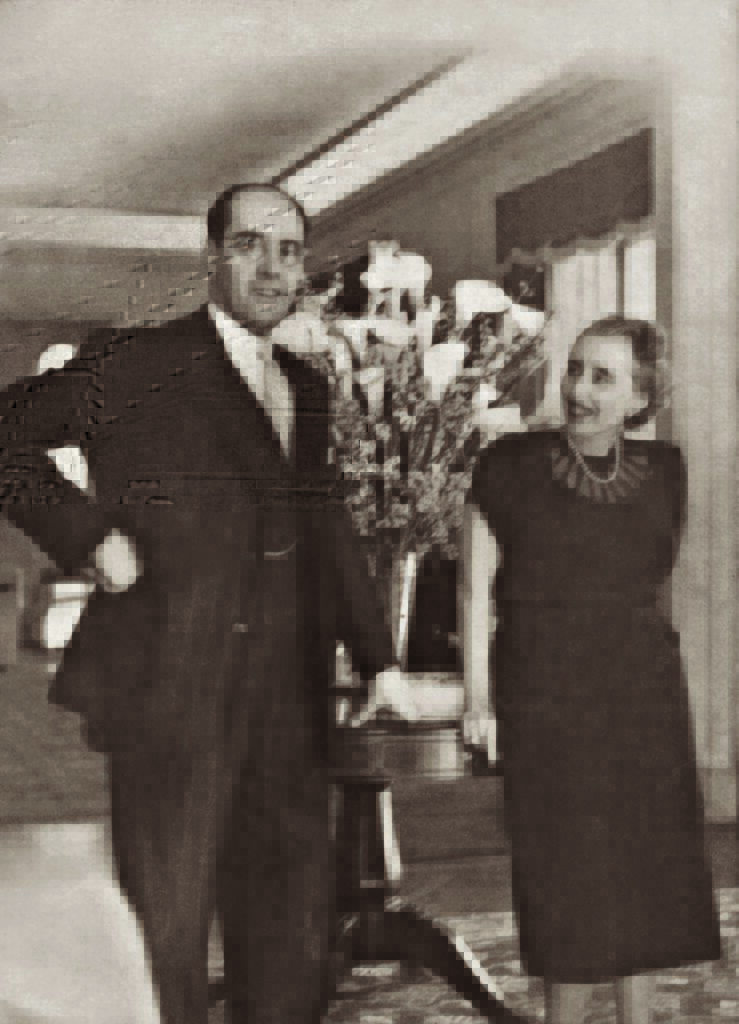
    Back in Lisbon, he got married, on 23 June 1924, to Margarida Pinto Basto, a descendant on his maternal side of the Counts of Pombeiro and on his paternal side of the family that owned the Vista Alegre Porcelain Factory. Given António’s passion for cars, they set off on their honeymoon in a racing car, a Farman Sport Torpedo.

    It is precisely his love for cars that gave rise to Medeiros e Almeida’s first professional project as an importer of Morris, Wolseley, Riley and MG cars to Portugal, and the opening of the A.M. Almeida car dealership in Lisbon.

    Medeiros e Almeida also took an interest in other pioneering business areas in Portugal, such as commercial aviation, in which he played an important role. In 1948, he acquired all the share capital of one of the first Portuguese airlines providing regular services, Aero Portuguesa, which he later merged into TAP – Transportes Aéreos Portugueses. He was also one of the founders of SATA – Sociedade Açoreana de Transportes Aéreos.

    In the meantime, he maintains several commercial activities in the Azores, where his parents were from, including his share in União das Fábricas Açoreanas de Álcool (UFAA), which was quite influential in the production of Azorean industrial alcohol and sugar, produced from sugar beet molasses. In 1967, he founded the agro-industrial company SINAGA – Sociedade de Indústrias Agrícolas Açoreanas and chaired its board of directors until his death.

    As the Medeiros e Almeida family had friendly and professional relations with the Bensaúde family, also of Azorean origin, the threat of a German invasion led Vasco Elias Bensaúde, of Jewish descent, to offer António de Medeiros e Almeida a partnership in 1941, which involved the temporary transfer of all the family’s companies.  At the end of World War II, the share was returned to the Bensaúde family in full.

    Medeiros e Almeida also made a name for himself in other areas, such as textiles, with the Torres Novas National Weaving Company, or the hotel business, with its participation in the construction of the Hotel Ritz, in Lisbon, and the Hotel Alvor, in the Algarve.

    His well-developed social sense led him to make commit­ments to several charitable causes, such as supporting the establishment of Universidade Católica, the children’s summer camp “O Século”, and the creation of the Salazar Foundation, whose objective was to build social housing.

    His prolific and respected commercial, industrial and charitable activities were widely recognised through the awarding of a number of national and international honorary decorations, such as that offered by King George VI of England for providing the necessary assistance to the allied forces during World War II through the companies he ran in the Azores


    The Medeiros e Almeida Museum

    The collection of the Medeiros e Almeida Museum – which includes furniture, painting, sculpture, textiles, goldsmithing, ceramics, sacred art, jewellery, watches, …, dating from the 2nd century BC to the 20th century CE – was built over the years, in line with Medeiros e Almeida’s sophisticated upbringing and experience and a very successful professional life. He himself wrote, “When I was 20, in 1915, I started becoming interested in antiques, and I started collecting them when I was 30 and when my funds allowed. This interest grew and developed and, little by little, I started collecting rare pieces of artistic and historical value.”
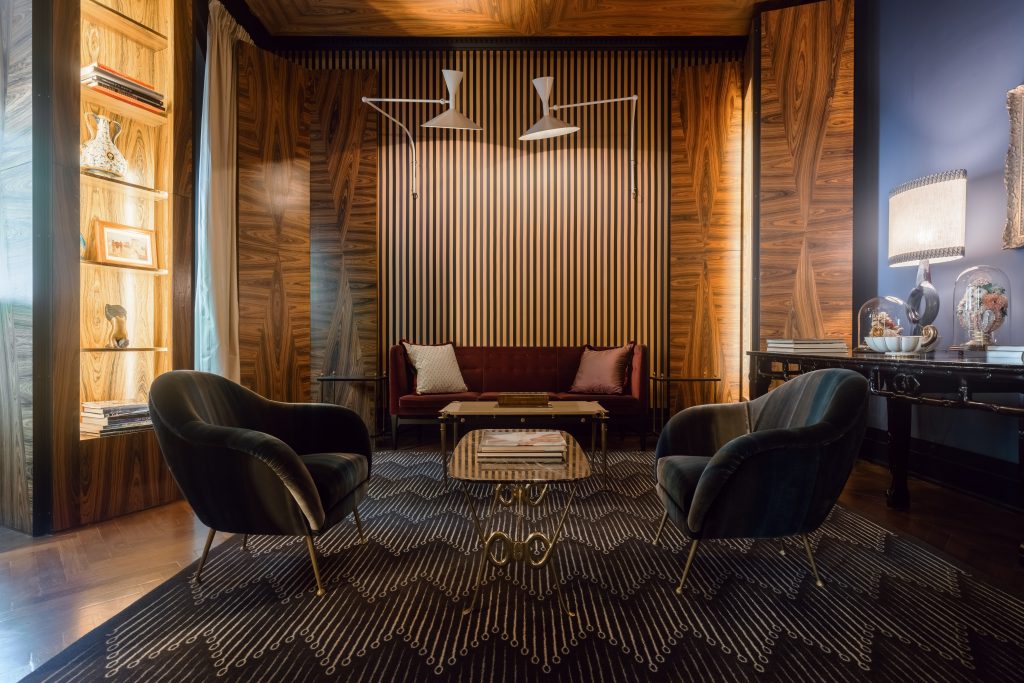
    In the period after World War II, with an art market rich in opportunities, the collector, with sound financial means and a more refined taste and knowledge, began buying from the best antique shops and auction houses in Europe. In the late 1960s, aware of the important collection he had gathered and having no descendants, Medeiros e Almeida looked for a solution that would not disperse the collection and idealized the transformation of his house into a museum where it could be integrated. From then on, his purchases continued at a fast pace, until his death in 1986.

    The Medeiros e Almeida Museum displays the collection that the collector gathered for around half a century, a vast and important group of works of art, of international artistic and historic relevance, whose typologies fall within the thematic field of the so-called decorative arts. The museum opens its doors to the public on 1 June 2001, thus fulfilling the aims of its founder: “… fulfilling my dream, which is to leave to my country the product of a long life of hard work”.

    Museu Medeiros e Almeida

    Rua Rosa Araújo, 41. 1250-194 Lisboa

    Open Monday to Saturday, from 10am to 5pm

    https://www.museumedeirosealmeida.pt/


  • Buchholz Bookstore: A new life at 80

    Buchholz Bookstore: A new life at 80

     Buchholz Bookstore: a new life at 80


    Rehabilitated and revitalized, one of the oldest bookstores in Lisbon has just revealed itself to the city filled with novelties. Among the greatest names in literature and books on current major issues, Buchholz is once again selling records, works of art, promoting concerts, and hosting conversations. And there’s more: an exhibition of personal objects belonging to authors, including manuscripts by José Saramago and António Lobo Antunes.

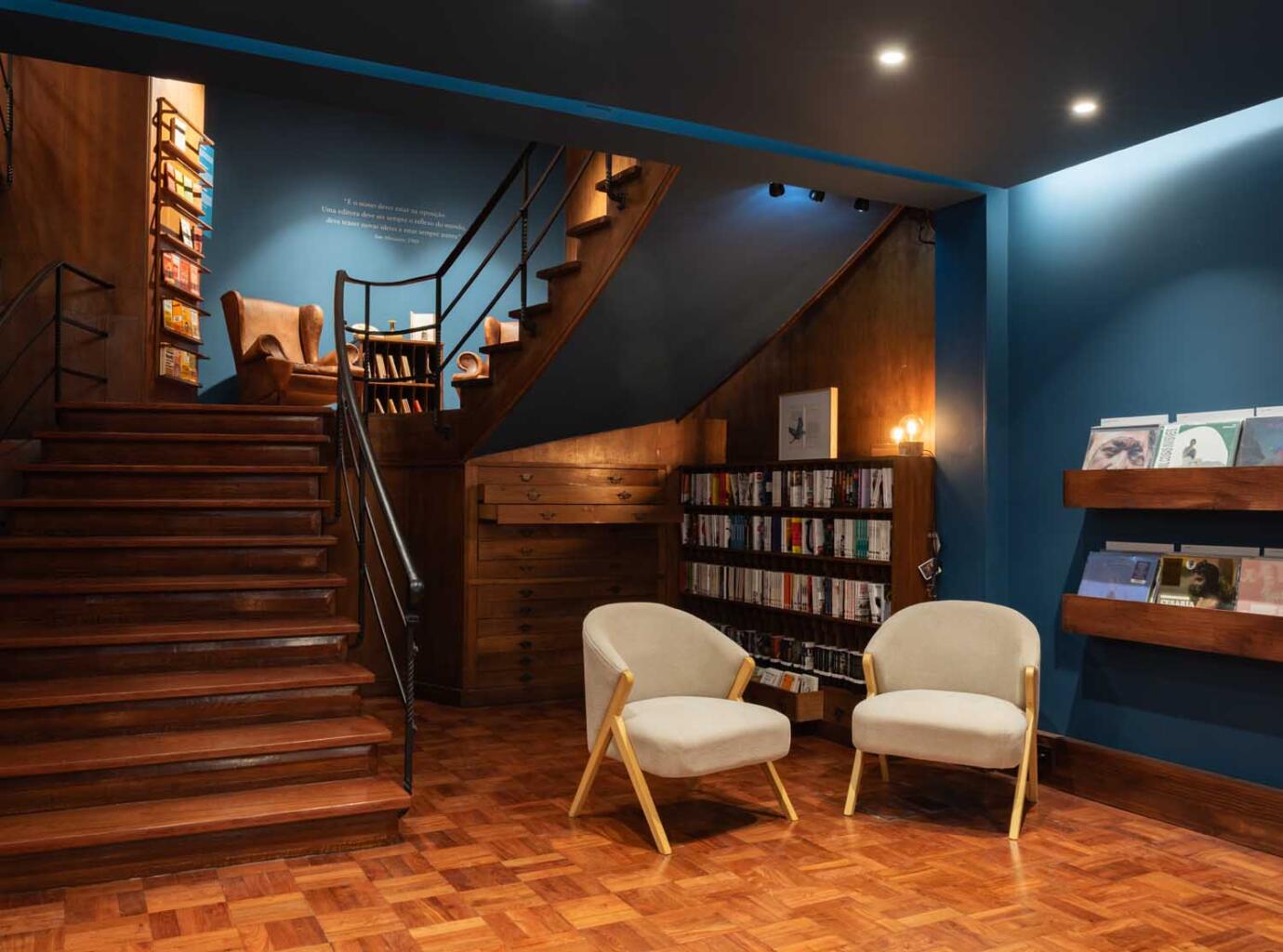
    Between a return to the past and a leap into the future, Buchholz has a new lease on life firmly rooted in the present. Celebrating its 80 years of stories, the Duque de Palmela’s street bookstore presents itself with a fresh face, emphasizing renowned names in literature and thought, a heightened focus on giving space to new fiction authors, an expanded offering of foreign-language books, and numerous titles about the city of Lisbon.

    Graphic novels, books on visual arts and music also emerge with renewed vigor, complementing spaces dedicated to vinyl records and works by Portuguese artists – two commitments to independent curation led by Flur Discos and Icon Shop.

    The three wooden-clad floors connected by a monumental spiral staircase are once again hosting cycles of conversations, concerts, and wine tastings, among many other initiatives. In an increasingly digital world, this is a commitment to analog and untransmissible interaction. The topics range from literature to major contemporary issues. After a day of study or work, the people of Lisbon have a new space for gathering and enjoyment.

    There are also three permanent exhibitions—one dedicated to Dom Quixote and its founder, Snu Abecassis, another about the publishing house that launched the only Portuguese Nobel laureate, and a third, spanning two floors, featuring personal objects of authors such as manuscripts from António Lobo Antunes and José Saramago, Isabela Figueiredo’s first typewriter, and Lídia Jorge’s favorite pens.

    The idea behind this renovation was to recover the DNA of this historical landmark. Founded by the German Karl Buchholz in the summer of 1943 on Avenida da Liberdade, the bookstore moved in 1965 to one of the streets parallel to the avenue, right next to Marquês de Pombal. At that time, during the Estado Novo regime, Buchholz was already a hub for gatherings and resistance.

    Both the classical music record store and the art gallery, featuring artists like Helena Almeida, Noronha da Costa, and Mário Cesariny, quickly became indispensable references in the city’s cultural life. Next to the floor-to-ceiling shelves, names like writers and poets António Lobo Antunes, David Mourão-Ferreira, Al Berto, and Assis Pacheco could be found.

    Buchholz was also a point of reference for several figures who shaped the political history of the country, such as Mário Soares, Sá Carneiro, Freitas do Amaral, and Francisco Pinto Balsemão. An interesting story: the idea for the provocative weekly newspaper “O Independente” was born here in the 1980s from a chance encounter between Miguel Esteves Cardoso and Paulo Portas, both regular customers.

  • Valverde Hotel wins “Europe’s Leading Luxury Boutique Hotel”

    Valverde Hotel wins “Europe’s Leading Luxury Boutique Hotel”

      Valverde Hotel wins “Europe’s Leading Luxury Boutique Hotel”

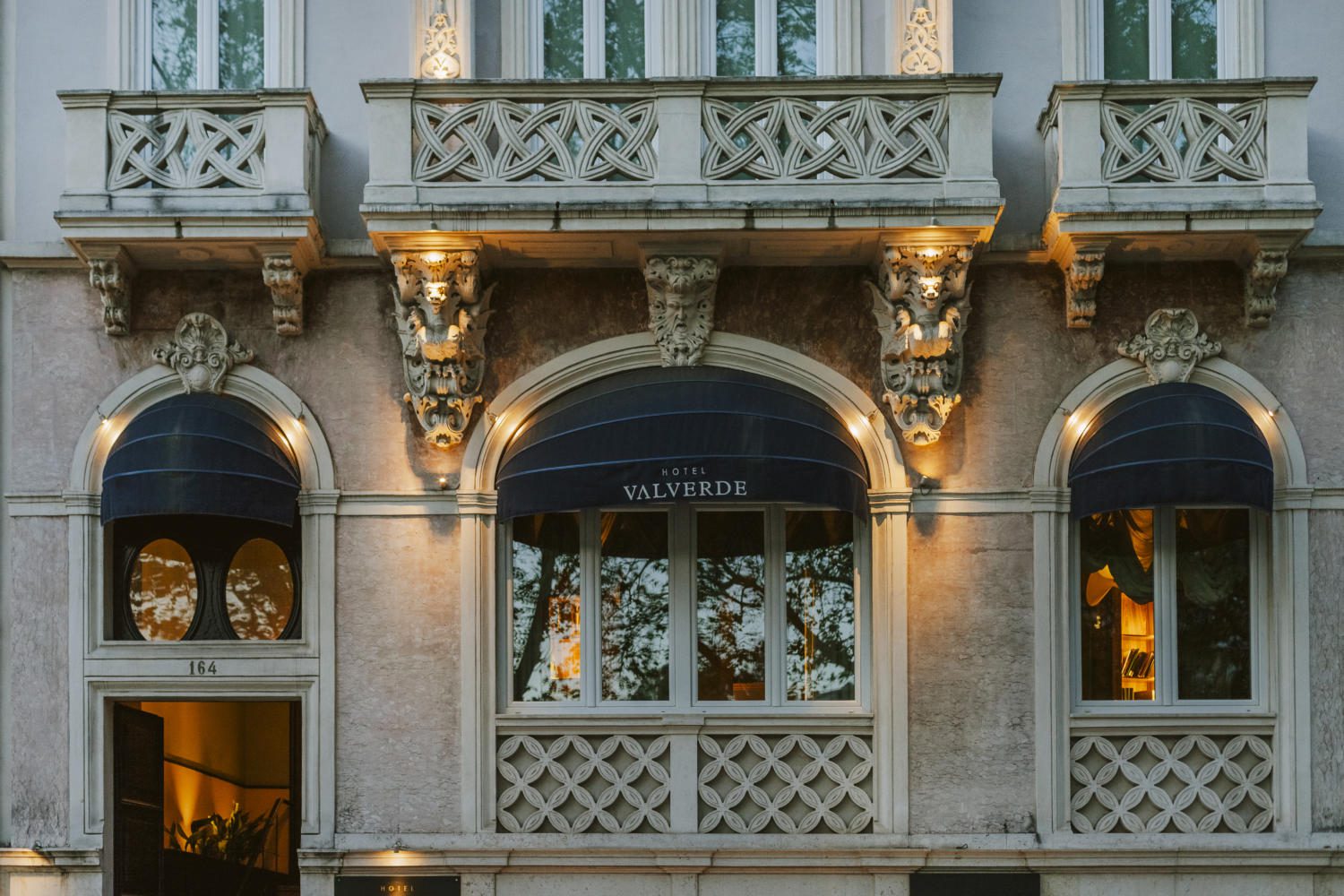
    The inconic Valverde Hotel, located in one of Lisbon’s main and most luxurious arteries – Avenida da Liberdade – and the only Relais & Châteaux property in the centre of Lisbon, has just been awarded “Europe’s Leading Luxury Boutique Hotel 2022” by the wordly renowned World Travel Awards.

    The hotel was nominated alongside other 15 luxury units located in a total of 8 European countries. In this 29th edition of the WTA, Portugal won 30 of the 144 European awards available.

    Adélia Carvalho,Valverde Hotel’s General Manager, says “We’re very proud to see Valverde Hotel, a member of Relais & Châteaux, being recognised by the 3rd time in a row as “Europe’s Leading Luxury Boutique Hotel” by an organisation so prestigious as the World Travel Awards. This award represents the consolidation of a status acquired by the hotel over the years, and it’s with great joy that we see it highlighted, not only among Europe’s hospitality industry, but also among the national one, with so many high-quality products appearing every day“.

    And because this award is the result of a group effort, Adélia adds “This award is dedicated to our team, who is immensely commited to their work attitude: to all of them, our heartfel thank you. We work very hard to provide well-being, training and a sense of belonging to our staff – it’s the only way that we can keep them united, motivated and focused on providing an exceptional service to all those who select us as their “home” in Lisbon. Thank you once again for the great recognition, that means so much to all of us!”

    The World Travel Awards were established in 1993 and are held annualy “to acknowledge, reward and celebrate excellence across all key sectors of the travel, tourism and hospitality industries”. Today, the World Travel Awards brand is recognised globally as the ultimate hallmark of industry excellence.

    World Travel Awards celebrates its 29th anniversary year in 2022 and Europe’s winners were announced on October 2nd, at midnight. Aside from the 23 national categories, Portugal won a total of 30 of 144 European awards, including “Europe’s Leading Destination” for Portugal, “Europe’s Leading City Break Destination”, “Europe’s Leading Cruise Destination”, and “Europe’s Leading Seaside Metropolitan Destination” for Lisbon, “Europe’s Leading City Destination” for Porto, “Europe’s Leading Beach Destination” for the Algarve, “Europe’s Leading Adventure Tourism Destination” for the Azores Islands, “Europe’s Leading Cruise Port” for Lisbon Cruise Port and “Europe’s Leading Tourist Board” for Turismo de Portugal.

    World Tavel Awards gala ceremonies are regarded as milestone events in the travel calendar, attended by the industry’s key decision-makers, figureheads, influencers and media. This year, the European ceremony took place in Spain, namely at the Hilton Malloca Galatzo.

    Graham Cooke, founder, WTA, said: “WTA has maintained its position as the industry leader for the past 29 years, consistenly proving its value as the global benchmark for recognising excellence in travel and tourim. I am delighted that so many senior industry figures will be attending what promises to be a fabulous evening, acknowledging those organisations leading Europe’s tourism recovery.”

    [button target=”_self” hover_type=”default” custom_class=”btn_ouro” text=”MORE ABOUT THIS AFFILIATE” link=”https://avliberdade.com/novo/en/valverde-hotel/”]
  • São Jorge Cinema – Projecting the future for 73 years

    São Jorge Cinema – Projecting the future for 73 years

     São Jorge Cinema – Projecting the future for 73 years

    Cinema São Jorge is the great House of Film Festivals in Lisbon. Annually, it receives: Kino – German Expression Film Festival, PLAY – International Film Festival for Children, MONSTRA, Italian Film Festival, Festival Política, IndieLisboa, BoCA Bienal, Mental, Lisbon Motorcycle Film Fest, Outsiders, Motelx, Queer Lisboa, French Film Festival and Doclisboa.

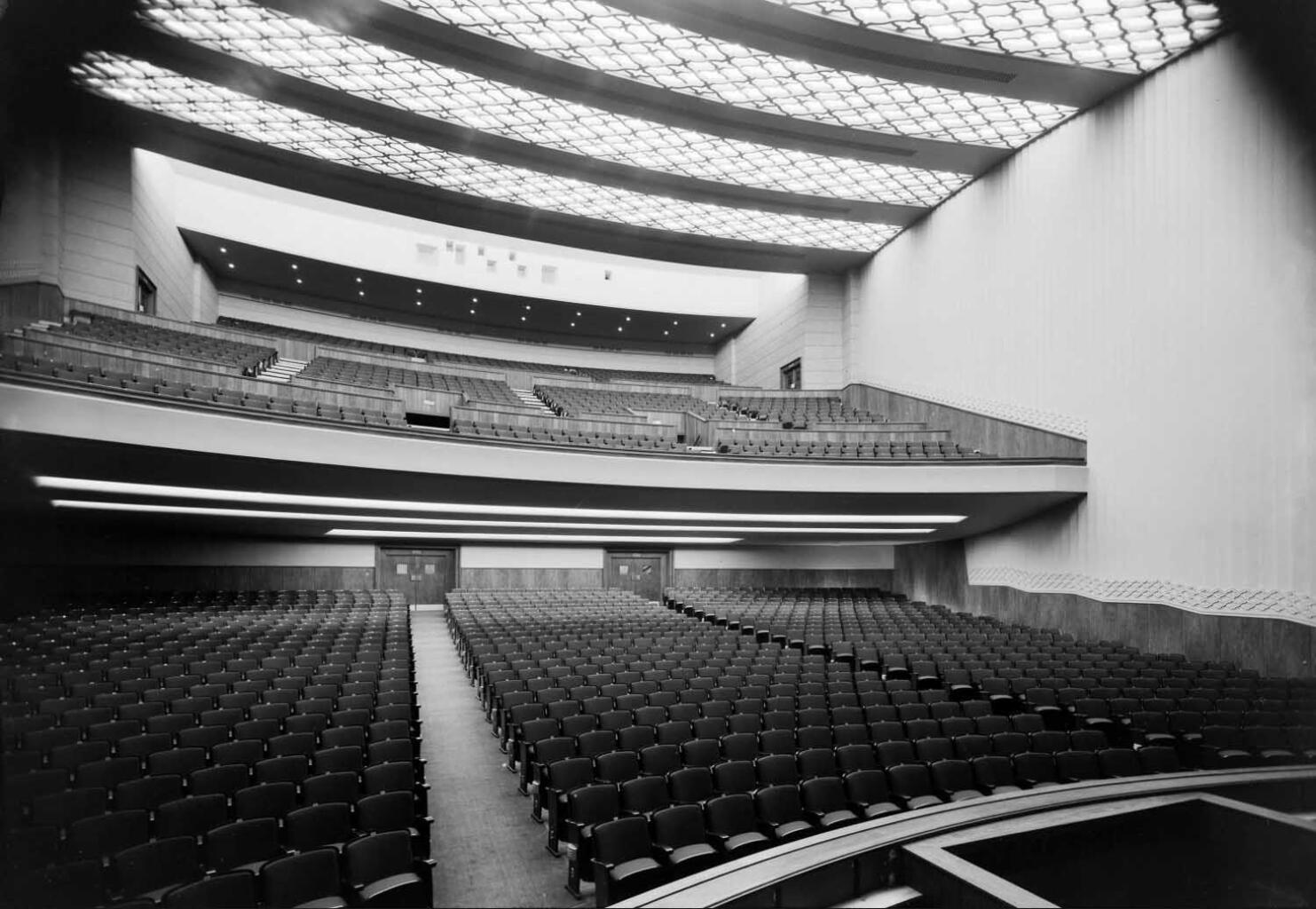
    The Cinema was inaugurated in 1950 and opened with the film “The Red Shoes”, by Michael Powell and Emeric Pressburger. The building, designed by architect Fernando Silva, won the Municipal Architecture Prize.

    Initially, it consisted of a single room, with a capacity for almost 2000 seats.

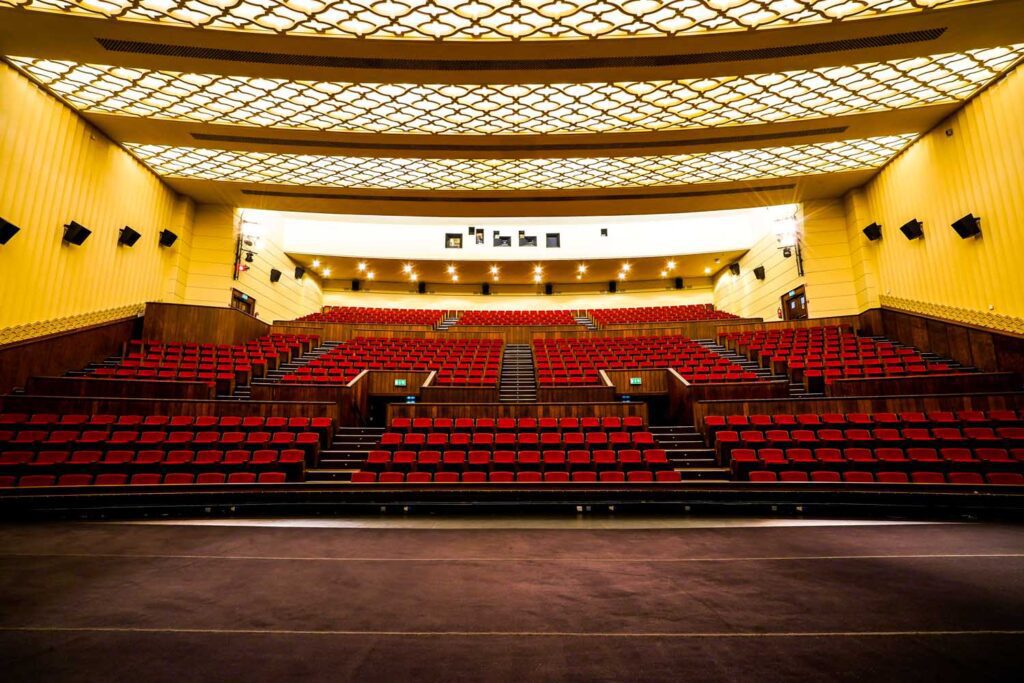
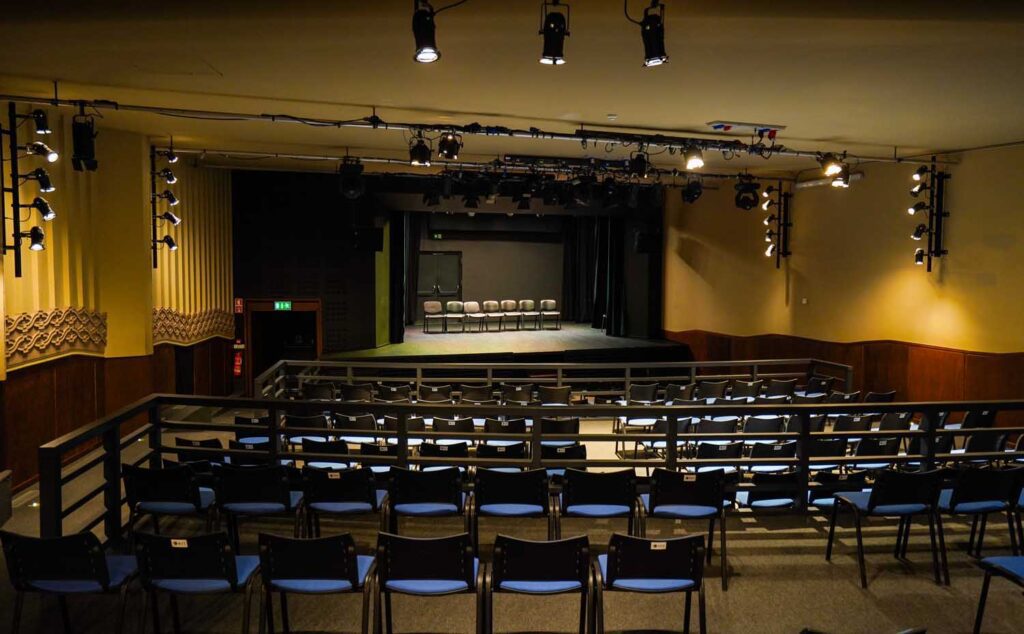
    In 1981, the interior of the building underwent extensive works, with the aim of creating 3 rooms. In the former Audience, 2 rooms were born, Room 2 and Room 3. The Manoel de Oliveira Room, the largest in Lisbon, was born in the former balcony.

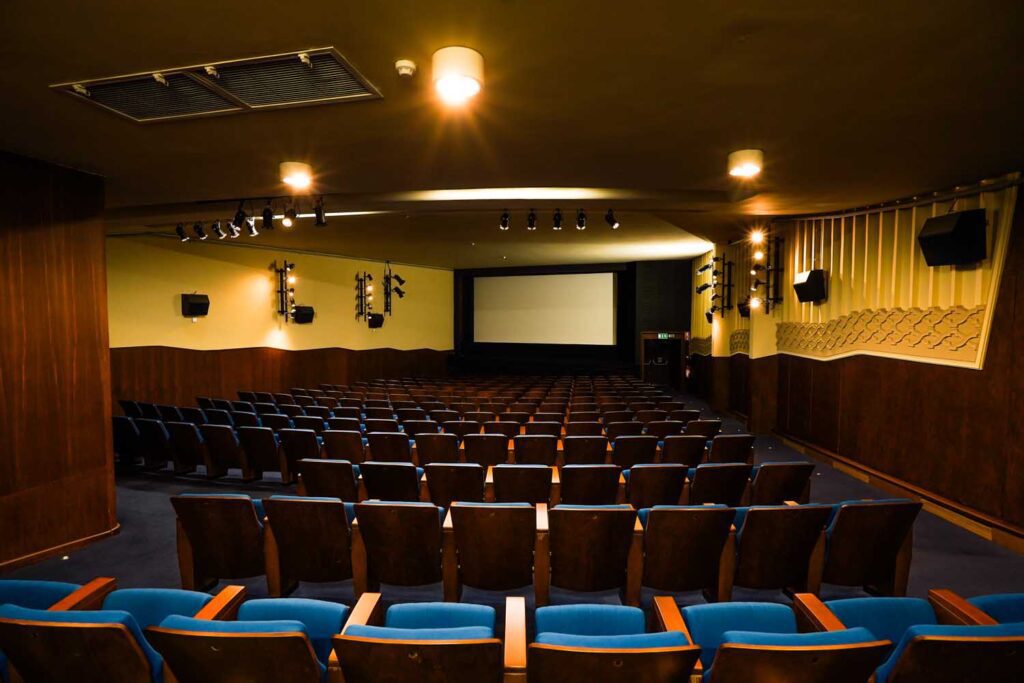
    Today, Sala 2 has capacity for 154 seats (+3 reduced mobility), Sala 3 has 199 seats (+3 reduced mobility) and Sala Manoel de Oliveira 830 seats (+3 reduced mobility).

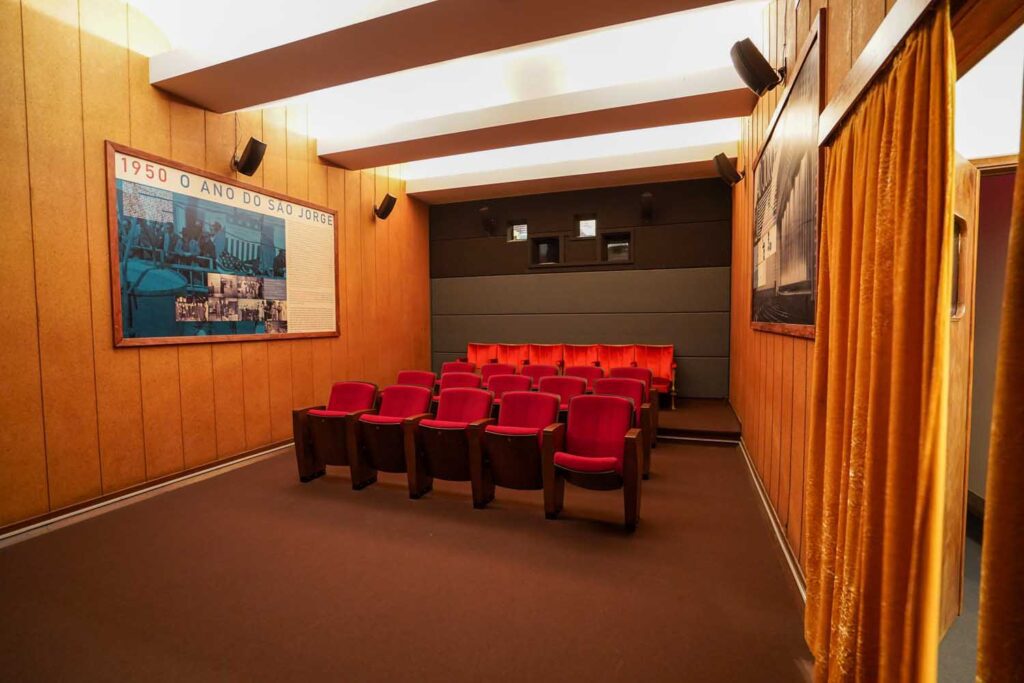
    The Cinema also has a fourth Room, called Rank, more intimate and with a capacity of 21 seats. Allegedly, in this room, films were censored during the Estado Novo period.

    The Cinema, in addition to Festivals, maintains some of its own programming, with several projects in operation, namely:

    Final Credits: they intend to give a second life to a series of films that have just concluded their careers in the national cinematographic circuit. In an intimate setting such as Sala Rank, we want to program cinematic enjoyment sessions, meeting with filmmakers and, in spaces, for debate and thought. Sharing sessions, as the Seventh Art has accustomed us to.

    Marsupial Sessions: The Afim de Filmes educational project programs these sessions adapted to the reality of new parents. The arrival of a baby is often a lonely journey for caregivers. Despite experiencing unique moments, their social life becomes non-existent. Here we propose Cinema sessions designed for mothers and fathers accompanied by their babies. In addition to watching a film, it is also an opportunity to exchange experiences.

    Lights, Phone, Action! | Cinema Workshop: Cinema is a magical place. But also a place of learning. And imagination, a powerful tool. This is the tool we need for this workshop, whose purpose is to make tapes – in fact recreating cinematographic micronarratives – and take them to the cinema screen.

    Visits: Here is a cinema that is many other things. Home of movies, but also of concerts. From stage dramas to comedy shows. Meetings and lectures. That is, a lot of blablablah of all kinds and shapes. Here is a cinema that is also made of memories and backstage, elements that we want to make known.

    Twitter: https://twitter.com/CinemaSaoJorge
    Instagram:
    https://www.instagram.com/cinemasaojorge/
    Facebook:
    https://www.facebook.com/SaoJorgeCinema

    [button target=”_self” hover_type=”default” custom_class=”btn_ouro” text=”MORE ABOUT THIS AFFILIATE ” link=”https://avliberdade.com/novo/cinema-sao-jorge/”]